Friday, March 28, 2014

Grow baby, Grow

If you saw India's financial position in the previous post, you could be excused for opining that we must cut expenditure. For most other countries, that would be the answer. But not for India. For India, the mantra has to be grow baby, grow.

India is uniquely positioned. It has all the ingredients for rapid growth - a hitherto underdeveloped economy, a dynamic and large domestic market, a large and young population, an education ethic coupled with hard work (mostly), and all the institutions that can enable growth. The trouble is that it has been constrained all these years - first by socialist claptrap and second by the neta babu raj.

You can see why growth has to be the single most important mantra for the next 10 years

  • The only way to provide economic upliftment for large sections of the population is through facilitating employment. The only way to facilitate employment is through economic growth - not by giving doles under the guise of the NRGEA.
  • Economic growth will lead to explosion of tax revenues to the government - helping close the yawning gap between revenues and expenditure and enabling big rises in productive expenditure.
I submit we should target a 8% GDP growth year on year for the next 10 years. We should completely forget about equality of wealth  during that period (let a few people get rich; remember the immortal words of Deng Xiaoping when he set China on the growth trajectory). A decade later we can stimulate more equitable growth. For now, go full blast for growth. Let us have the enviable problem of the economy overheating through too much growth, a la China.

Growth can be achieved by the following strategy

  • Reform the land acquisition policy - this is the most difficult reform of all.  Set up an independent body that will adjudicate on land acquisition issues. Set fair purchase price, insist on all families selling land to be provided employment, and establish the principle of 75% acceptance means the other 25% have to compulsorily give in.  The independent body shall be a quasi judicial body and the courts should refuse to intervene. Decision making by the body must be in short frames of time - say 3 months. Establish fair and transparent process and public acceptance would come. Ruling party , in its own self interest, should not instigate trouble in opposition ruled states.
  • Single window clearance of industrial proposals by the government. Speed of clearance is essential - no more than 1 month, else clearance is deemed to have been made. No bureaucrat is to be made the subject of a CBI investigation for a decision that may later prove to be correct or incorrect - he should only be investigated if he has personally made money in the process.
  • Trawl through all the laws relating to commercial enterprises - be it in agriculture, industry or services and repeal 75% of them, taking some risks in the process. Strict laws should only be in some limited areas such as consumer and worker health and safety, pollution, etc. In other areas, the government should stop its utopian meddling. There is a precedent for such action - when the 1991 reforms happened, this is exactly what Manmohan Singh and Chidambaram did in the field of exports . Some unintended consequences may happen, but that is a price to pay for growth and can be subsequently corrected.
  • Enact the new Direct Taxes Code and the Goods and Services Tax, which has been in legislative limbo for a decade. This will make India one economic entity rather than each state erecting boundaries. If some states with opposition governments do not fall in line, they should be ignored and the rest should proceed. This will give stability in taxation.
  •  Throw open every sector to domestic, foreign or extra terrestrial investment. Frankly it doesn't matter in today's world where the capital is coming from. If it comes from outside, all  the better - government's finances will be eased.
  •  Big push to infrastructure for the next 5 years - power, ports, roads and railways. The government needs to do very little - simply allow private capital to do its job and not come in the way. Power sector reforms are essential - this is a specialist area by itself, but India has tied itself into knots. I won't get into the details of power reforms, but it just needs a strong leader to remove all the shackles, price power  economically (no freebies), buy / bully peace from the environmental lobby (no dilution of pollution standards however)  and let the problem solve by itself in 5 years.
  • Access to capital is already good for economic enterprises - both equity and debt. The government needs to do nothing different and simply maintain status quo
  • Make regulators independent, arm them and leave them alone to do their job. SEBI and RBI are two excellent examples that do this today. In every sector, simply clone this model.
  • No subsidies, tax holidays, nothing,  for industries.  The sheer economic opportunity will spur investment. No sops needed.
  • The industry and services sector do not need government intervention or help. Agriculture does. I am not an expert on policy measures required in agriculture, but entrust that task to experts like  M S Swaminathan and simply implement whatever they say.
  • Above all, glorify speed. Introduce a law that specifies time limits for every governmental or regulatory action. No sitting on files. Making a wrong decision in haste is not a crime. Making no decision at all IS a crime. 
  • Shift government's approach to economic activity to one of facilitation and not of investigation. Shamelessly court economic activity of any kind without making moral judgements on relative merits of one over the other. In that process a few (even many) rotten apples may slip through. I submit this is an acceptable price to pay for growth.
  • Create an overwhelming momentum for growth. When the momentum is overwhelming, opposition is difficult and might be restricted to a few areas. Backtrack there and let loose the rest of the push.
Growth will not be smooth - there will be some areas where things will turn out badly. Some (the 1%) will make huge money. Some will be left out. But a large and overwhelming majority will be uplifted. The example of China proves that this is indeed the case.  It is worth taking the risk, because inaction and not growing is sure to doom the majority of our brothers and sisters to perpetual poverty. That is a bigger crime.

What of corruption ? That is such an important topic in India that it will be the subject of  a full post that shall follow.

How can this be politically sold. Again a topic that deserves a full discussion in a separate post, also considering the implications of the proposals on the expenditure side.

Simultaneous with the growth push, the government should also remove income tax exemptions for agricultural income, for house property if reinvested, for long term capital gains etc. Very few (preferably nil) exemptions must exist in the tax code and the rates should remain at the current 33%. This has been the direction of tax laws anyway since 1991 - that's why income tax collections are such a success relatively speaking.

A GDP growth of 8% plus the removal of exemptions will result in tax revenues rising by at least 10% per annum. That will mean an additional Rs 1 lakh crores of revenues each year. Coupled with sensible policies on the expenditure side, the country can actually step up productive expenditure, and bridge the deficit, at the same time in 5-10 years.

Will such an approach work ? Yes it will. There are two examples in history. India itself in 1991, did something like this. The result is plain for all to see. And then there is China from 1980 to 2000. The Chinese example has one major difference - it was all government led with most of the investments coming from the government. I am recommending the opposite of this. The growth will be private led with governments only facilitating - for the Indian government today is not financially in a position to do any better.

For those interested internationally, this strategy can work only for India, and partly for Nigeria and Indonesia. It will not work for any other country. For those interested, happy to debate offline !

In the next post, we shall turn our attention to the expenditure side.

What do you think ?
Wednesday, March 26, 2014

India's Economic Manifesto - 1

Tags
Continuing from the earlier post, we will attempt to understand, and then co create an economic manifesto for India. This is in the context of the upcoming Indian elections, where this blogger believes that

  • Economic upliftment is the most important objective for the nation.
  • Political parties are either completely ignoring, or not doing justice to an economic manifesto 
  • Where they are publishing manifestos, they are mouthing platitudes like we will create X million jobs, we will abolish poverty, etc etc without a word as to "how".

This series of posts cover only the economic tasks before the nation - not social or political or other  issues which are also important. Since this is a business blog, and this blogger believes that economic advancement is the most important priority for the country, we will focus exclusively on economics.

In order to consider what should be the strategy ahead, we should firstly understand where we are. This post explains India's current financial situation. This is grossly simplified, not exactly accurate, with my own classifications , avoids technical jargon, and is not as economists would put it - but this is broadly correct and will enable us laymen to understand the country's position. They represent only the Central government position - not that of the states.

India's central revenues for the year 2013-14  were as follows

 
Revenues           Rs crores
Income Tax            629,871
Customs            175,056
Excise            179,538
Service Tax            164,927
Non Tax Revenues            193,226
Capital Receipts              36,643
Less States' share          (322,880)
Total Revenues   1,056,381


 India's central expenditure in 2013-14 was as follows


Expenditure      Rs crores     Rs crores
Interest        380,066
Defence        203,672
Food Subsidy           92,000
Fertiliser Subsidy           67,971
Petroleum Subsidy           85,480
Rural Devp Subsidies (incl NRGEA)           78,452
Pensions to Govt staff           74,076
North East Subsidies           24,262
Police           43,148
All Others        144,227
Non Productive Expenditure         1,193,354
Education           67,398
Health           30,145
Railways           30,223
Roads           21,399
Agriculture           17,557
Industry           22,393
All Others           88,926
Productive Expenditure            278,041
Grants to States for Plan Expenditure            119,039
Total Expenditure        1,590,434
Note : Classification of "productive" and "non productive" is my own

As a nation, our revenues are Rs 10 lakh crores and our expenditure is Rs 15 lakh crores. So every year we borrow Rs 5 lakh crores to make up the shortfall. The primary reason why there is inflation of 10% + in our country is this.

In understanding this situation, the following explanations may be helpful

  • The interest line in the expenditure is the cumulative effect of all these deficits which have built up over the years and we keep adding to the burden every year. In the short run, we can do nothing about this item
  • The states' share, both in the revenues and in the funding of plan expenditure is constitutionally mandated. This cannot be touched, in terms of percentage.
  • This represents only the Central position. They do not consider state revenues and expenditure . Most states run bigger deficits than the centre and have major subsidies and freebies in their expenditure. There is no ready consolidation of central & state finances - so I am not able to present that position to you.

You can now perhaps understand why this should be the starting point for any manifesto. If a party says they will spend $1 trillion on infrastructure (as the Congress Party said yesterday), you can clearly see that this is bullshit - there is no money. This is also the reason why the BJP plank of replicating the Gujarat model is questionable - how will they create infrastrcuture when the financial position is as bad as it is now - there is no money to spend on infrastructure unless hard decisions are taken on non productive expenditure. No political party is explaining this reality to the voters.

We will begin our own manifesto from here. We will not only present a manifesto, but also how this can politically be sold to the voters - for without that, all this will only be theory.

Readers are  invited to offer their ideas.

Tuesday, March 25, 2014

An economic manifesto for India


Indian elections are around the corner – easily the most complex democratic exercise on earth affecting one in seven people in the world directly, and more indirectly.

Democracy is all about choices. In order for that to succeed, the choices must be clear. The biggest issue facing India is economic – how to lift millions of Indians out of poverty and give the best possible economic advancement for as many Indians as possible. And yet, if you see the electioneering, there is total absence of economic policies or what the choices are. There are general myths , perceptions and blind loyalties on which the people are being asked to vote. No specifics at all. 

In the area of economic policy, the front runner is arguing that he would replicate the success of Gujarat nationally.  That is fine, but how would he do it ? India is not Gujarat.  It is far more complex and requires an entirely different set of policies.  So what specifically  would he do to ensure “development” (his favourite word) in India.  Complete silence.

The incumbent is maintaining complete silence as well. If the track record of the last ten years is anything to go by, he would be a disaster. If he is going to change tack, then he should say what is the new direction he would take. Nothing there

There is a motley crew who would all like to be the leader and who would like to constitute the third or fourth or fifth fronts. They are all, especially the three women amongst them, economically illiterate and their track records in their respective states is abysmal.  No announcement about what their policies would be, except the lady from the East mouthing some general platitudes.

Then there is the new kid on the block. We do not as yet know, whether any of his pronouncements are to be taken seriously, but the general feeling, economics wise, is that it would be the biggest disaster of them all. In any case his philosophy appears to be that noise is better than policy.

This is ill serving the people of India. If we are to make a choice, we need a specific manifesto. In the absence of any of them stating this, this blogger, in his hotheaded way is proposing to offer one. Not that anybody would take the slightest notice, but then blogging is all about airing one’s views. 

In the next post, I will outline India’s revenues and expenditure in a simplified way and ask you to make the choices. Then we will together, co create an economic manifesto. How about it. I will also plead with some of my usually silent readers to also articulate their view on the choices  - every Indian should think about the way forward.

By the way, the theory that economics does not matter with people and that they will not be influenced by what is economically the right thing to do is completely untrue. For evidence, you only have to look towards China. The entire legitimacy of a system of government that is unitary, non choice based, dictatorial , non representative, etc etc is the implicit economic contract with its people. Politicians in India might wish to ponder over the reality that if a free and fair election were to be held in China today, the Communist Party would romp home with a three fourths majority.

We will also cover the political side of the economic argument – how to sell it to the voters as well.   

Walk the next few days with me - I promise that the discussion will not be too technical. Let us create our own manifesto for India.

Friday, March 14, 2014

Huānyíng guānglín

Tags
China exports far more than it imports. Everybody knows that.  Oversimplified , the difference between goods and services exports and goods and services imports is called the Current Account balance. It can be a surplus or a deficit. China has seen a surplus for a long time. India has seen a deficit for a long time.

China's current account surplus reached a high of 10% of GDP in 2007. Under normal circumstances if such a chronic situation existed, the currency would rise making imports cheaper and exports costlier leading to an equilibrium. But China was controlling exchange rates, which led to massive imbalances in the world economy.  The US led the chorus terming China a currency manipulator. In any case, such huge imbalances affected the global economy in all sorts of ways.

What to do about the problem ?

Well, the problem has started to be solved by itself, in a way few would have anticipated . China's current account surplus has fallen to 2% of GDP.  What on earth has happened ?

China's surplus in goods continues to be vast. It continues to export merrily way above what it imports. What has depressed the surplus, however is that it now runs a huge deficit in services. Put together, the net surplus is now low enough not to be a burning issue.

How has a huge deficit in services been built up - at $122 bn, it is the largest deficit in the world (after all everything in China comes in gigantic proportions). Just one component contributed to  $ 80 bn of this $ 122 bn. Tourism with a capital T.

In 2007, China faced a surplus in tourism as well - more people visited China than Chinese visiting the world. In 2013, that has completely turned topsy turvy. Millions of Wangs and Lis are packing their bags and touring overseas. They exchange their yuan for dollars to spend. They are, in effect "importing a tourist experience". Hence this massive deficit !

The "solution" to trade imbalances that threatened the world is simple. Here's a neat solution for the US, which could be copied by virtually every country. Abolish the need for visas for Chinese to visit your country. Welcome them with open arms. Put up Chinese name boards, direction signs, everywhere. Train everybody in the tourism industry to speak Chinese. Open a million Chinese restaurants. Serve chicken feet for breakfast. Set up gambling resorts purely for foreigners if you don't want to corrupt the locals (the Chinese love to gamble; that's why Macau is many times bigger than Las Vegas now). Open  MSNBC Chinese and FOX Chinese (Yuk) ! Get P. Diddy to rap in Chinese. Get Ryanair and Southwest Airlines to fly to mainland China. Etc Etc Etc. Actually, the US government needs to do nothing - all this will happen anyway.

It will solve many problems. The trade imbalances will disappear. A huge spending boost will come to the US. Every teen star from Justin Bieber to Selena Gomez will add 100 million more fans. If American style democracy is indeed good for the world (a highly debatable hypothesis, but we shall let that pass), then exposing millions of Chinese to "freedom" (NSA notwithstanding), can only be to the good. Preet Bharara can turn to suing Chinese for violating sacred American laws by spitting.  A win win, if there ever was one. Or Wang Wang, if you prefer !

By the way, if you are wondering what the title of this post is, it is simply "Welcome" .


Thursday, March 13, 2014

CalumetPhoto - Chapter 7 Bankruptcy

Tags
While rumors have been swirling for much of the day on Wednesday, the story about whether or not the storied camera store chain CalumetPhoto has filed for bankruptcy have come true.

Calumetphoto.com LLC has voluntarily filed for Chapter 7 bankruptcy, listed as case #14-08908 in the Northern District of Illinois United States Bankruptcy Court. The filing is dated March 12, 2014 and the first meeting is scheduled on April 22, 2014.


CalumetPhoto, in recent months, has been pulling back from their participation in activities they have, in the past, normally sponsored or been involved in, and there have been grumblings amongst store management as well as serious concerns raised by some equipment manufacturing representatives and vendors as well. While many companies file for Chapter 11 bankruptcy in order to reorganize, sources tell Photo Business News that while CalumetPhoto tried this route, ultimately they found themselves in Chapter 7 bankruptcy, which is the phase companies end up in when Chapter 11 does not work, and the company has to liquidate.

CalumetPhoto, founded in 1939 grew to almost 3 dozen stores nationwide, and, in recent years, most notably acquired the Penn Camera camera stores in 2012 in the Washington DC region after they had gone into Chapter 11 bankruptcy. After shedding 5 of the 8 locations, the remaining 3 were intended to continue to fulfill the various government contracts that Penn Camera had acquired over the years, as a hopeful source of ongoing revenue for the beleaguered company.

(Continued after the Jump)
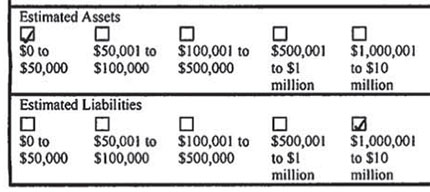
According to court documents (see below) CalumetPhoto lists assets of less than $50k, and estimated liabilities in excess of $1,000,000, and 585 debtors:


All CalumetPhoto stores in the United States are closed, and classes have been cancelled and their @calumetphoto twitter account is now non-existent, yet there were posts on their Facebook account up until mid-day Wednesday. The overseas CalumetPhoto stores in the EU remain operational. According to Seng Ng, the Director of Finance for CalumetPhoto U.K., when asked how this will affect the UK store, responded "not at all" continuing "we share the same name but are two distinct entities." Their website remains operational and stores there are open.

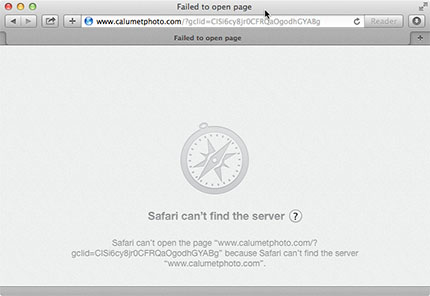
Late in the day Wednesday, visitors to the Calumetphoto.com website found it non-operational, as below:


Reports from current and former employees and individual store management have reportedly been detailing the trials and tribulations of their times at CalumetPhoto and the state of the company has reportedly not been well.

The PDF of the court filing can be viewed here, as a PDF.


-------------------

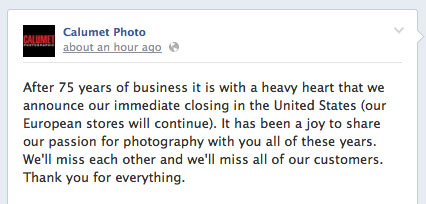
Update: At about 10:30am Eastern time, CalumetPhoto posted this on their Facebook page:


Please post your comments by clicking the link below. If you've got questions, please pose them in our Photo Business Forum Flickr Group Discussion Threads.

Tuesday, March 11, 2014

Getty's Flickr Agreement Ends Like Titanic

Tags
Getty Images, a Carlysle Group (NASDAQ: CG) company, today, announced a "notice to terminate" their relationship with Flickr as a source of images. What was launched in March of 2009, when Getty's editors were characterized by Flickr as "...inspired by the quality and creativity of our members...." (Building the Flickr Collection on Getty Images, 1/21/09) has now ended.

The parallel between the launch of the largest ship in the world, and it's eventual sinking because of poor stewardship is similar to Getty and Flickr, where arrogant captains in both settings think they know what they are doing. Getty, arguably the largest stock operation in the world, as the Titanic, ran into the immovable object that is the iceberg in the form of Flickr. Now as the executives of Getty stand amidst the musicians entertaining the unknowing on the aft decks, the ship is taking on water. It's only a matter of time before she breaks apart and sinks to unfathomable depths.

Of course the agreement didn't end before Getty sifted through, what they characterize as their having "...assessed over 90 million images, selecting 900,000 from 42,000 contributors as part of our Flickr collection." Interestingly enough, using the $0.15 per image valuation factor Getty is said to use to value their collection, that's only a valuation of $135,000 over the course of 5 years. I am sure that they paid editors more than that to cull through all the images, so I'd count that as a bad business decision. Given they have two years to make up enough money to generate the $1,200,000,000 for their 2016 loan, the Flickr deal seems to have generated content that is a few zero's short of solving their problem. Consider that they had an existing pool of 9,000,000 images, which was a massive library of content for them to consider, and they still were only able to select 900,000 images. With that pool of images exhausted, and the relationship now terminated, they now have to look at the normal ingestion rates of images into their systems, and there does not seem to be any mathematical way that they can bring in enough images to satisfy the $1.2B loan that is coming due.

(Continued, after the Jump)
What's amazing is that, if you consider that they looked at 90,000,000 images, and they only came up 900,000, that's only a 1% success rate for a salable image from Flickr. Compare this to their stated production levels at the 2014 Sochi Winter Olympic Games - "our photographers captured 1,004,849 images, of which 52,362 were distributed to the world..." and you get a 5.2% ratio. Now, to be fair, I'm sure Getty wanted to report a figure higher than a million, so they likely counted the many times a photographer producing 12-14 frames per second used their camera's maximum capture speeds, so it's reasonable to consider that a 2 second burst producing 25 images would only produce 1-2 selects of the best image, however, they're boasting the numbers, so when you celebrate by the numbers you are subject to criticism by those same numbers.

We here at Photo Business News, in 2008 reported, in The Curious Case of Getty and Flickr (7/11/08) about much of the problems that the Getty deal with Flickr was for photographers. With Getty last week having culled through what they believe to be all the salable/valuable images, announcing their image embedding feature ( Monetizing Getty's 35M Image Archive via FREE Editorial Uses, 3/7/14) put them in competition with Flickr, which has a slideshow/embedding feature since 2007.

Getty announced:
Statement by Getty Images re Flickr


Getty Images and Flickr have worked together for five great years, celebrating the originality of photography enthusiasts worldwide. Getty Images curators have assessed over 90 million images, selecting 900,000 from 42,000 contributors as part of our Flickr collection.

Getty Images has provided notice to terminate our existing agreement with Flickr. Our original agreement reached its end, and while we continue to be open to working with Yahoo!/Flickr, we do not have a new agreement at this time. We will continue to work with the tens of thousands of contributors and license the existing content.

Innovation and evolution are at the core of our work at Getty Images and we are continuously developing new technologies and tools to enhance our crowd-sourced imagery for our contributors and customers. We recently launched Getty Images Moment, our new iPhone app designed for contributors, as well as global content partnerships with EyeEm and Samsung. We look forward to announcing further developments in the coming months. Watch this space.
These developments are not surprising, however, they do indicate a continued flailing about as the Getty leadership team, who clearly not only don't get it but are also playing catchup in many other areas where they are behind. It's only a matter of time before Carlysle's investment turns out to be as ill-fated as the Titanic. Strike up the band for one more melody. Don't bother watching the crew scurry about for the lifeboats. Don't say you weren't warned.

Please post your comments by clicking the link below. If you've got questions, please pose them in our Photo Business Forum Flickr Group Discussion Threads.

Monday, March 10, 2014

Copyright Office Roundtable Discussion on Orphan Works - 2014 Edition

Tags
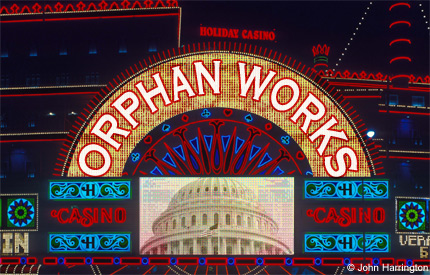
The United States Copyright Office brought together stakeholders from across the spectrum of intellectual property producers and consumers to discuss various ways to approach the issue of orphaned works during two days of roundtable discussions Monday March 10th and Tuesday March 11th, 2014, held at the Library of Congress in Washington DC.

Almost six years ago, we here at Photo Business News wrote Orphan Works Act = Thieves Charter? which delved into what the bills that were proposed to be law were espousing. We followed that up with Orphan Works - History In the Making, and we even wrote about the problems with the bills then, espousing the need for a solution to orphaned works, just not the one that was being proposed, in Orphan Works 2008 - A Wolf In Sheep's Clothing. We even produced a piece titled Orphan Works - A Unique Set of "Myths" and "Facts" in an attempt to dispel some of the myths surrounding orphan works as proposed.

While the problem has not changed, the public and the stakeholders are much more engaged on the matter now, and the discourse seems to be taking a more reasoned approach. The Association of Research Libraries, for example, has changed their position from a call for orphan works legislation to an approach that utilities fair use. Here, they note "Unlike any option that will require legislative action, fair use is already the law...certain rightsholder groups are sufficiently fearful about misuse of their abandoned property that seemingly no search will be sufficiently diligent for them."

One thing is clear, this time around, the provisions of the bills that we will likely see in the next iteration will be better and more clear than what was in the 2008 bills. Below are a series of images from the roundtable discussions on the subject.
Over a hundred people came together to participate and listen to participate in a roundtable discussion on Orphan Works/Mass Digitization, Monday, March 10, 2014 at the Library of Congress in Washington, DC. The roundtable discussion, held over the course of two days, is being held by the US Copyright Office to gather insights for future legislative solutions to orphaned works. Photo: � 2014 John Harrington.


Karyn Temple Claggett Associate Register of Copyrights and Director of Policy and International Affairs listens to remarks during a roundtable discussion on Orphan Works/Mass Digitization, Monday, March 10, 2014 at the Library of Congress in Washington, DC. The roundtable discussion, held over the course of two days, is being held by the US Copyright Office to gather insights for future legislative solutions to orphaned works. Photo: � 2014 John Harrington.


Eugene Mopsik, Executive Director of the American Society of Media Photographers, Left, makes remarks during a roundtable discussion on Orphan Works/Mass Digitization as Jeff Sedlik, CEO of the PLUS Coalition, right, looks on, Monday, March 10, 2014 at the Library of Congress in Washington, DC. The roundtable discussion, held over the course of two days, is being held by the US Copyright Office to gather insights for future legislative solutions to orphaned works. Photo: � 2014 John Harrington.


Jeff Sedlik, right, CEO of the PLUS Coalition makes remarks during a roundtable discussion on Orphan Works/Mass Digitization, Monday, March 10, 2014 at the Library of Congress in Washington, DC. The roundtable discussion, held over the course of two days, is being held by the US Copyright Office to gather insights for future legislative solutions to orphaned works. Photo: � 2014 John Harrington.


Mickey Osterricher, general counsel for the National Press Photographers Association makes remarks during a roundtable discussion on Orphan Works/Mass Digitization, Monday, March 10, 2014 at the Library of Congress in Washington, DC. The roundtable discussion, held over the course of two days, is being held by the US Copyright Office to gather insights for future legislative solutions to orphaned works. Photo: � 2014 John Harrington.


(More photos, after the Jump)
Douglas Hill, right, managing partner of Rights Assist, makes remarks during a roundtable discussion on Orphan Works/Mass Digitization as Colin Rushing, General Counsel of Sound Exchange, looks on, Monday, March 10, 2014 at the Library of Congress in Washington, DC. The roundtable discussion, held over the course of two days, is being held by the US Copyright Office to gather insights for future legislative solutions to orphaned works. Photo: � 2014 John Harrington.


Rob Kasunic, Associate Register of Copyrights and Director of Registration Policy and Practices, U.S. Copyright Office makes remarks during a roundtable discussion on Orphan Works/Mass Digitization, Monday, March 10, 2014 at the Library of Congress in Washington, DC. The roundtable discussion, held over the course of two days, is being held by the US Copyright Office to gather insights for future legislative solutions to orphaned works. Photo: � 2014 John Harrington.


Nancy Wolff, right, counsel for the Picture Agency Council of America makes remarks during a roundtable discussion on Orphan Works/Mass Digitization as Mickey Osterricher left looks on, Monday, March 10, 2014 at the Library of Congress in Washington, DC. The roundtable discussion, held over the course of two days, is being held by the US Copyright Office to gather insights for future legislative solutions to orphaned works. Photo: � 2014 John Harrington.


Over a hundred people came together to participate and listen to participate in a roundtable discussion on Orphan Works/Mass Digitization, Monday, March 10, 2014 at the Library of Congress in Washington, DC. The roundtable discussion, held over the course of two days, is being held by the US Copyright Office to gather insights for future legislative solutions to orphaned works. Photo: � 2014 John Harrington.


Eric Harbeson of the Society of American Archivists makes remarks during a roundtable discussion on Orphan Works/Mass Digitization, Monday, March 10, 2014 at the Library of Congress in Washington, DC. The roundtable discussion, held over the course of two days, is being held by the US Copyright Office to gather insights for future legislative solutions to orphaned works. Photo: � 2014 John Harrington.


Karyn Temple Claggett Associate Register of Copyrights and Director of Policy and International Affairs listens to remarks during a roundtable discussion on Orphan Works/Mass Digitization, Monday, March 10, 2014 at the Library of Congress in Washington, DC. The roundtable discussion, held over the course of two days, is being held by the US Copyright Office to gather insights for future legislative solutions to orphaned works. Photo: � 2014 John Harrington.


Maria Matthews, manager, Copyright & Government Affairs at Professional Photographers of America makes remarks to remarks during a roundtable discussion on Orphan Works/Mass Digitization as Charles Sanders of the Songwriters Guild of America looks on, Monday, March 10, 2014 at the Library of Congress in Washington, DC. The roundtable discussion, held over the course of two days, is being held by the US Copyright Office to gather insights for future legislative solutions to orphaned works. Photo: � 2014 John Harrington.


Please post your comments by clicking the link below. If you've got questions, please pose them in our Photo Business Forum Flickr Group Discussion Threads.

Friday, March 7, 2014

Monetizing Getty's 35M Image Archive via FREE Editorial Uses

Tags
Much has been said about the decision by Getty Images to make available to editorial online outlets, over 35,000,000 images, for free. Well, free in the sense that you're not spending any money to use the images. However, in exchange for this, you agree to allow Getty to track all the visitors to your website. How many come, their IP addresses, how long they stay, and so on and so forth. Make no mistake about it either, this isn't "free forever", Getty is looking to get into the big-data business, connecting image viewer data with data analytics from other sources. Once they reach a critical mass of users, they will essentially be able to sell advertising alongside and beneath their images (note the big white space between their name and the social media links in all the samples everyone is sharing) and they can also sell animations, where before the image appears, an ad is displayed for a few seconds, just like the lead-in advertising on videos just like YouTube. The revenue from repeated views here is far and away greater than the few cents Getty makes from web page usage. Getty's big splash is akin to Steve Jobs keeping secret the iPhone and then getting hundreds of millions of dollars in free advertising to promote it when it launches.

Getty has made clear that their current contributor contracts allow for this, and that no compensation is due the rights holders of those images. These images are put forth as a part of a marketing effort, and so to that end, those who created the images are out of luck.

Getty has said that they are tired of suing their userbase, and creating angry factions of the online community like those at organizations like "Extortion Letter Info" where lawyers gather together to fight off Getty's demand letters.

Could there be something else that's a problem for Getty? In 2010 we reported on a copyright problem where the methodology used by Corbis, on the advice of lawyers, was found to be flawed, and countless registrations were deemed invalid (see: Corbis' Copyright Registrations - Images "Not Registered" Court Finds). Could it be that Getty does not want to face this same house of cards that could be stirring within their registrations? Could it be that all (or almost all) of their registrations are invalid? Or, perhaps Getty just doesn't bother to register their work, and as such, the teeth that people think they have are actually toothless and decaying gums that have no bite to follow up their bark?

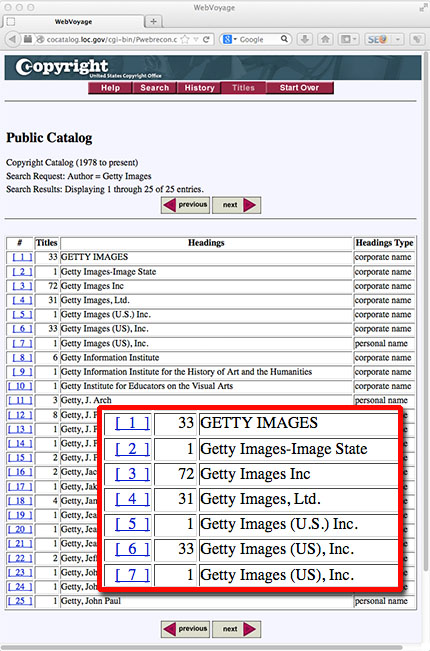
A search of the US Copyright Office shows for a search of their database under "Getty Images" shows their last registration as 2008, specifically images related to the images of Brad Pitt and Angelina Jolie's twins. Here's a listing from the Copyright Office as of March 7, 2014:


They have a total of 172 registrations. On the other hand, we here at Photo Business News register regularly, and a search of the Voyager database shows 229 records for our registrations alone. Consider the tens of thousands (or even hundreds of thousands) of images Getty produces worldwide each day, and receives from contributors, and unless there's some secret registration system they are employing, or they are doing it under a different name, then there's a bit of a problem for Getty in that they're not registering their work. That's a problem if that's the case. Oh, and the notion of a "database registration" doesn't really hold much water either when it comes to photographic registrations.

(Continued after the Jump)
So, if your copyright registrations have no teeth and thus you are not getting your day in court, and you're engaging in toothless fights with hundreds of infringements, why not allow people to use them and get analytics out of them?

The fact is that there are millions of images sitting dormant and otherwise generating no money on web pages, even when they're rights-managed images at a web resolution, someone forgets the image is there, forgets to renew, and so on and so forth. Royalty-free images, of which many many rights-managed images are competing against, generates a one-time fee of about $1.00. Then, that image sits there for months and years. Now, most every blogger wants good SEO, and they work hard to link-bait people into driving traffic, whether to sell ads, or generate notoriety. Now, you have thousands and even hundreds-of-thousands of bloggers generating millions and millions of pages using free Getty content. Once a critical mass is created, Getty will begin selling ads.

In addition, because it may well be that Getty doesn't have registrations for all the images that are being infringed, the removal of the iframe and copyright management information ("CMA") is a DMCA violation of upwards of $2,500 per infraction, that, wait for it, does not require a copyright registration to be awarded. So if someone strips out the iframe or copyright information from an image Getty can easily collect $2,500 or so per image. Have a look at this:
17 U.S. Code � 1202 - Integrity of copyright management information
(a) False Copyright Management Information.� No person shall knowingly and with the intent to induce, enable, facilitate, or conceal infringement�

(1) provide copyright management information that is false, or (2) distribute or import for distribution copyright management information that is false.
(b) Removal or Alteration of Copyright Management Information.� No person shall, without the authority of the copyright owner or the law� (1) intentionally remove or alter any copyright management information,

(2) distribute or import for distribution copyright management information knowing that the copyright management information has been removed or altered without authority of the copyright owner or the law, or

(3) distribute, import for distribution, or publicly perform works, copies of works, or phonorecords, knowing that copyright management information has been removed or altered without authority of the copyright owner or the law,
knowing, or, with respect to civil remedies under section 1203, having reasonable grounds to know, that it will induce, enable, facilitate, or conceal an infringement of any right under this title.
Now, that means that the removal of CMA allows the copyright owner access to civil court, and does not compel them to enter federal court, which, in turn, requires a valid registration certificate before you can have your day in court. Now, on to section 1203:
17 U.S. Code � 1203 - Civil remedies
(a) Civil Actions.� Any person injured by a violation of section 1201 or 1202 may bring a civil action in an appropriate United States district court for such violation.
(b) Powers of the Court.� In an action brought under subsection (a), the court�

(1) may grant temporary and permanent injunctions on such terms as it deems reasonable to prevent or restrain a violation, but in no event shall impose a prior restraint on free speech or the press protected under the 1st amendment to the Constitution;

(2) at any time while an action is pending, may order the impounding, on such terms as it deems reasonable, of any device or product that is in the custody or control of the alleged violator and that the court has reasonable cause to believe was involved in a violation;

(3) may award damages under subsection (c);

(4) in its discretion may allow the recovery of costs by or against any party other than the United States or an officer thereof;

(5) in its discretion may award reasonable attorney�s fees to the prevailing party; and

(6) may, as part of a final judgment or decree finding a violation, order the remedial modification or the destruction of any device or product involved in the violation that is in the custody or control of the violator or has been impounded under paragraph (2).
(c) Award of Damages.� (1) In general.� Except as otherwise provided in this title, a person committing a violation of section 1201 or 1202 is liable for either�

(A) the actual damages and any additional profits of the violator, as provided in paragraph (2), or

(B) statutory damages, as provided in paragraph (3).

(2) Actual damages.� The court shall award to the complaining party the actual damages suffered by the party as a result of the violation, and any profits of the violator that are attributable to the violation and are not taken into account in computing the actual damages, if the complaining party elects such damages at any time before final judgment is entered.

(3) Statutory damages.�

(A) At any time before final judgment is entered, a complaining party may elect to recover an award of statutory damages for each violation of section 1201 in the sum of not less than $200 or more than $2,500 per act of circumvention, device, product, component, offer, or performance of service, as the court considers just.

(B) At any time before final judgment is entered, a complaining party may elect to recover an award of statutory damages for each violation of section 1202 in the sum of not less than $2,500 or more than $25,000.

(4) Repeated violations.� In any case in which the injured party sustains the burden of proving, and the court finds, that a person has violated section 1201 or 1202 within 3 years after a final judgment was entered against the person for another such violation, the court may increase the award of damages up to triple the amount that would otherwise be awarded, as the court considers just.
Well, Getty's 2011 contract outlines how they get to handle intellectual property claims:
1.11 Right to Control Claims. Getty Images shall have the right to determine, using its best commercial judgment, whether and to what extent to proceed against any third party for any unauthorized use of Accepted Content. You authorize Getty Images and Distributors at their expense the exclusive right to make, control, settle and defend any claims related to infringement of copyright in the Accepted Content and any associated intellectual property rights (�Claims�). You agree to provide reasonable cooperation to Getty Images and Distributors and not to unreasonably withhold or delay your cooperation in these Claims. Getty Images will not enter into any settlement that will compromise your ownership of the copyright in Accepted Content or that prohibits your future conduct with respect to Accepted Content without your prior written consent. Getty Images will pay you Royalties on any settlements it receives from Claims. If Getty Images elects not to pursue a Claim, you will have the right to pursue it.
So now Getty gets to go after people who remove copyright management information, and collect on each of those in civil court. Faster and easier than federal court, and much cheaper.

Now, enter object recognition. A company like Stipple monetizes images with their own embedder that means that if I as a photographer take a photo of a celebrity wearing Prada boots, using a Gucci purse, and an Old Navy dress, provided I include that information as tagged in the image, I can generate revenue if someone clicks through from that image to a site like Amazon that would sell them, and I collect a few percentage points in revenue from each sale. A $400 purse could garner $4 - $8 in income from a single click/sale, so it encourages photographers to manually tag them. A company like Samsamia tags images using fashion image recognition semi-automatically. Other software automates object recognition so that no one needs to manually tag them - it's done automatically. If Getty controls the iframe where all this is happening, on hundreds of millions of images around the world, they could generate tenfold amounts of income.

As such, Getty has just co-opted the entire blogosphere as free distributors of their advertising vehicles. Getty's minions are now doing their bidding like the Wicked Witch of the West sent out her flying monkeys, yet the monkeys had to be fed. Getty's minions are doing all the work for less than peanuts. Consider that a magazine produces editorial content in order to generate readers who will view the paid advertising adjacent to it. It spends a great deal of money producing that content, and then charges advertisers. This upends that model, where the editorial content is being produced for free, in every known niche of interest globally, and Getty gets all the income from the ads and also a much broader audience for commercially viable images to consider.

This is why they're allowing the New York Times to use their content online for free, which at first blush seemed like a bad idea. But, in the end, they are essentially taking over the advertising that appears in the newspaper. They are not satisfied to take over the ads adjacent to the editorial content, they will now own the ads within the editorial content. You can't pay to get monetizable links within a New York Times editorial story - that's as sacrosanct as the space inside a baseball diamond to sports fans, even moreso. However, Getty, provided the NYT opts to use the images for free, has now given up control of the visual part of their editorial content, ceding it to Getty.

Imagine you're a Getty ad sales rep - and you can say "we can offer you an ad inside the New York Times' editorial space." In fact, it's even reasonable to assume that, say, the pharmaceutical CEO who testifies before Congress on a particularly polarizing point, and who could never dream of being able to immediately place adjacent to the article about his testimony, a rebuttal or company link for more information on the company's perspective, could now, within seconds of the story appearing, buy an ad that would appear below his photo, or as a 5 second preview before his photo appears, providing a rebuttal to the article. In fact, a company could buy such a rebuttal ad space wherever images from that testimony appears, worldwide. I even see a point where the Getty sales team sees news events of this nature on a schedule and makes initial outreach to the marketing departments for those companies, pre-selling ads to appear beneath or over the photos just like magazines put out a schedule of topics in the comping year so when the big travel issue comes out all the travel companies have already bought space in those issues. As such, I suspect, respected news outlets will not cede this space to Getty's free offering, unless they're getting a piece of it that equals or exceeds what they would get for the ads adjacent to the editorial content. The NYT may well continue to pay for their uses so as to keep their editorial pages within their control.

Everyone seems to see this as Getty's way to combat copyright abuse. This is a naive as a day old bambi. It makes Getty appear as if they are giving up, giving in, and supporting blogs and being helpful. They are not. They are positioning themselves as the world's largest advertising resource so that the Carlysle Group (NASDAQ:CG) , which owns Getty, can turn around and sell Getty to Google or Yahoo. The pitch is "this is the YouTube of still photography - free photos and revenue from wraparound and play-over ads...". Look at how Google snapped up YouTube for that reason. Free videos propagated globally and Getty just sits back and counts the validated eyeballs and collects all sorts of data about them. It's the same with still photos now. Further, As crazy as it sounds, when Carlysle bought Getty, they did it in fast-and-loose-80's-style leveraged-buyout fashion, using a loan secured by Getty's assets to buy Getty and made Getty responsible for paying the loan back. Getty doesn't have that kind of money sitting around, and they've got a $1,200,000,000 loan coming due in about 2 years.

So far, the contracts that Getty has with it's contributors allow them to do this as marketing, for free, without compensation to the contributors. And, just as with Getty monetizing the metadata of an image from Pinterest without being obligated to share that income with the photographers (because Getty's contracts don't require it because a metadata income stream isn't from an "image license") and from what I have heard, there are no plans for photographers to earn any part of the advertising that is adjacent to (or precedes the viewing of) their image. Getty's telling photographers "oh, this will drive people to our site and the commercial sales will give is a reach we haven't before." This sounds remarkably like "we'll loose a little on each use, buy make it up in volume."

The real losers will be the content producers - the photographers. Of course, Corbis and the rest of them will look at this and wait, and all the while Getty's images will get embedded deeper and deeper into the internet's archives and the rest of the stock agencies will be playing catchup. Considering that 20% of Getty's archives are generating about 80% of their income, this isn't a problem, monetizing the rest of the 80% sitting around, making them all a sort of homing pigeon. However, Getty's own internal valuations are at about $0.15 per image, so if a photographer with 100,000 images decided to pull out, the monetizers look at that and say "oh well, too bad for them, that's about a $15,000 loss for us. Moving on. Next."

Welcome to the new world order of stock photography.

Please post your comments by clicking the link below. If you've got questions, please pose them in our Photo Business Forum Flickr Group Discussion Threads.